
Semi-Metallic / Formed Metal / Soft Facing
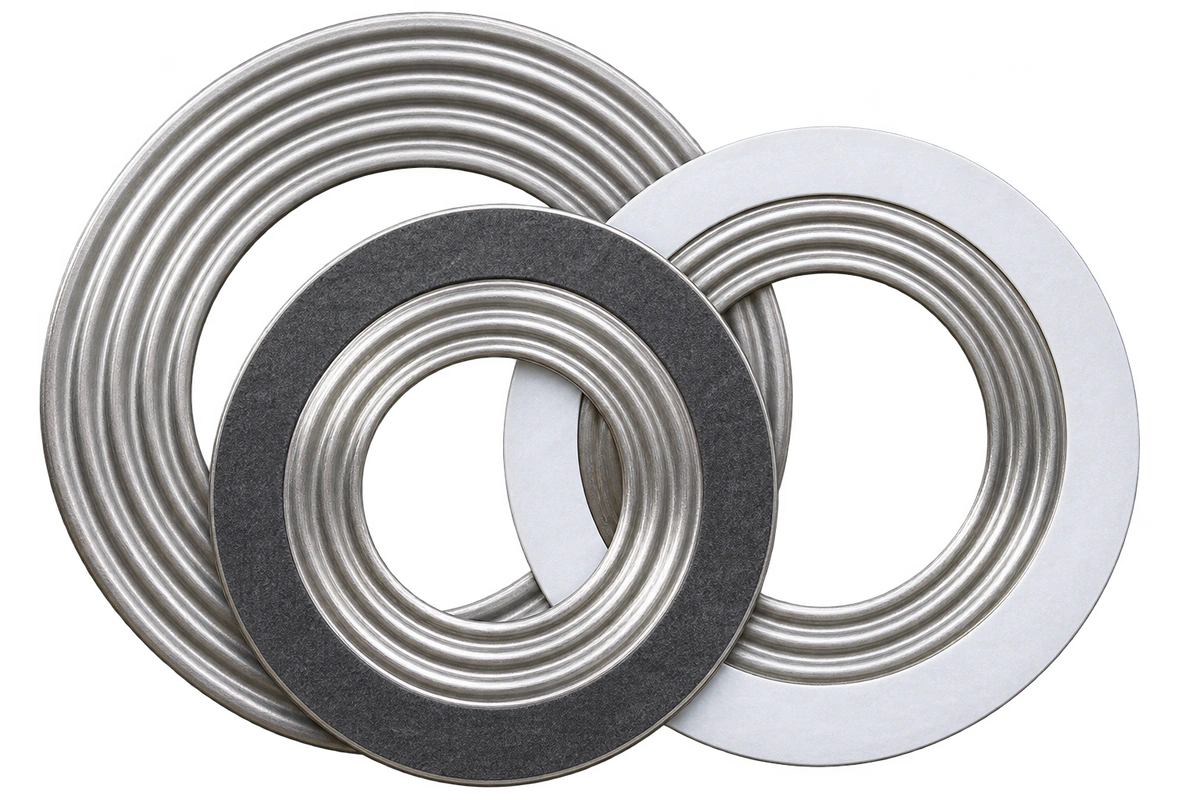
Corrugated Metal Gaskets with Soft Facing
A formed corrugated metal core supports soft sealing facings. Match the profile and facing grade to the available sealing land.
Product Overview

| Construction | The sealing element combines a corrugated sheet-metal core with a separate compressible facing at the sealing surfaces. |
|---|---|
| Nominal size range | Use the nominal size and PN or Class of the mating flange. For an equipment joint, use the approved drawing and confirm the requested size by enquiry. See dimensional references. |
| Dimension range | Define finished ID and OD or outline, core thickness, corrugation pitch and height, facing thickness and total thickness on the approved drawing. |
| Material specifications | Specify core alloy and facing grade and thickness separately. See material options. |
Key Features & Material Options
Key features
- Formed core
- The drawing defines the height and spacing of the corrugations.
- Soft sealing faces
- Compressible facing material contacts the mating surfaces.
- Seating width
- Check the faced sealing width against the available flange seating land.
| Core | Stainless steel is a documented example. Specify the grade and sheet thickness before forming. |
|---|---|
| Facings | Flexible graphite and expanded PTFE are documented options. Select a grade for the fluid and temperature. |
Confirm material grade and availability with your enquiry.
Standards, Dimensions & Pressure Classes
| EN 1514-4 | Covers specified metallic or filled metallic designs for PN flanges. Verify the exact faced construction against its scope before applying its dimensions. |
|---|---|
| EN 13555 | Gasket parameters and test procedures for circular flange joint design where applicable. |
Confirm size and fit
Give the flange standard, designation and facing. Use the approved section drawing to establish the core and facing dimensions.
Technical Specifications
| Corrugation geometry | Specify core gauge, wave height and pitch, and how far the corrugations extend across the core. |
|---|---|
| Facing build | Define material, thickness per face, coverage and total gasket thickness. |
| Assembly conditions | Review seating geometry and available bolt load for the fluid, design pressure and temperature. |
Quality & Testing
| Core geometry | Agree limits for the formed profile and cut edges. |
|---|---|
| Facing quality | Agree the tolerances for facing coverage and thickness and criteria for damage or lifting. |
| Finished checks | Specify finished outline, thickness and required core and facing records. |
Downloads & Documents
Review the gasket and joint information to specify.
General bolted flange guidance from the Fluid Sealing Association.
List certificate or traceability requirements in your enquiry.
Reference the approved drawing and revision in your enquiry.
Frequently Asked Questions
How does this differ from bare corrugated metal?
A separate soft facing covers the sealing surfaces of the formed core.
Does nominal pipe size determine the finished thickness?
Use the applicable gasket table or section drawing for thickness. Pipe size identifies the mating flange.
Request a quote
Send the joint drawing, core profile, facing requirements, service conditions and quantity.